
Kwame Mensah
The Firestarter
“No long ting! Straight back to the yard.”

The Ghanaian table
The game you grew up arguing over, built for phones that are in different rooms — and for one screen in the middle of the room, when they are not.
The shared board runs in a browser today. The phone app is in testing — where things stand.
In your hand
Not a mockup. Every screen below is the build running, photographed on a phone this morning.
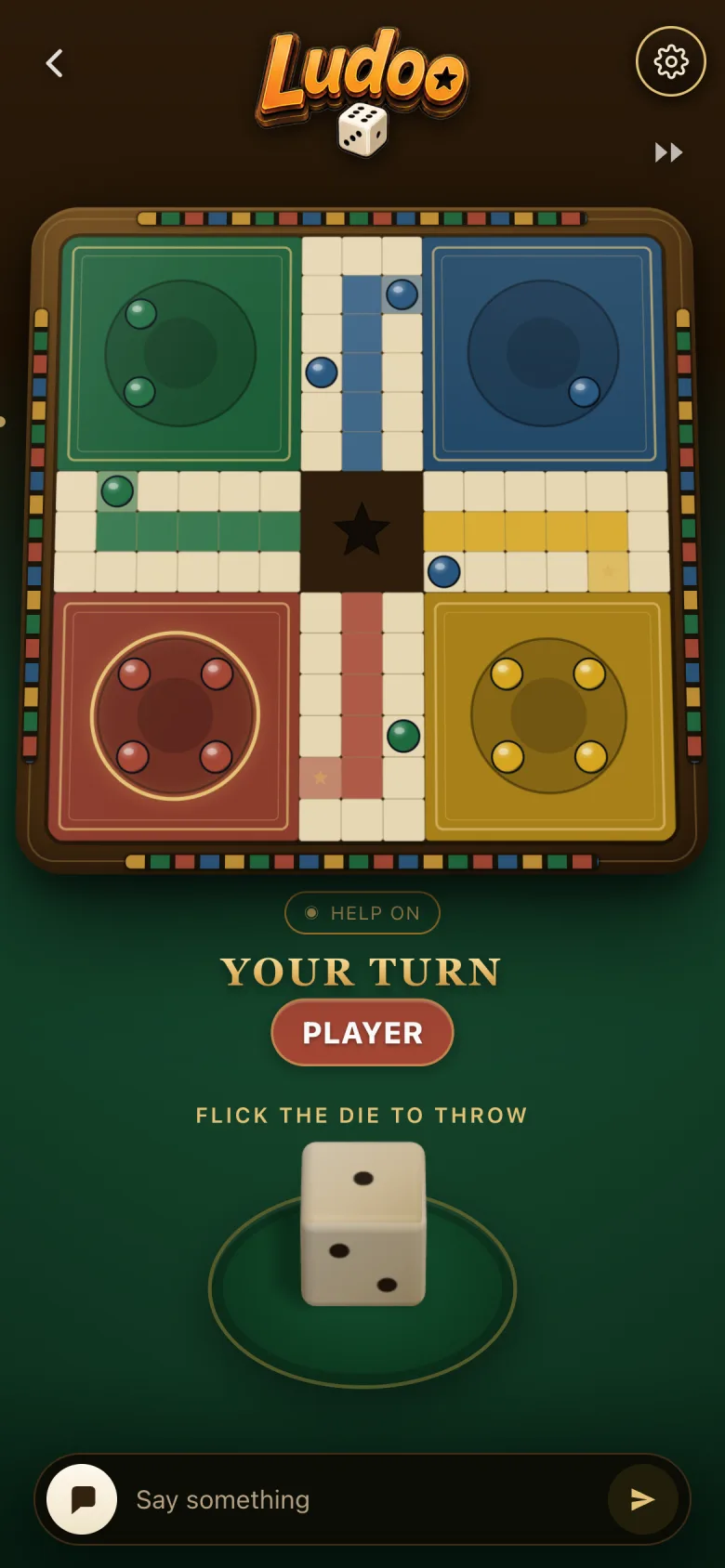
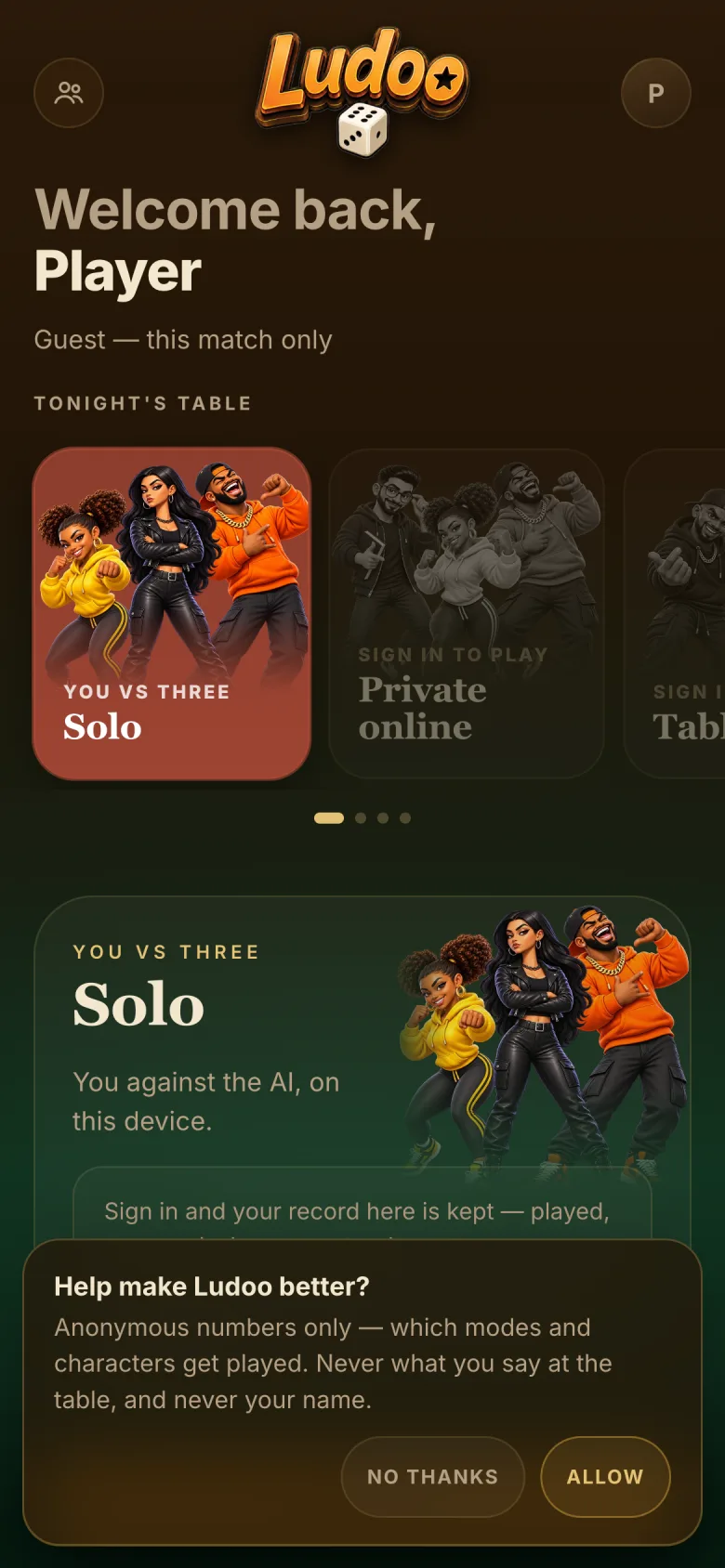
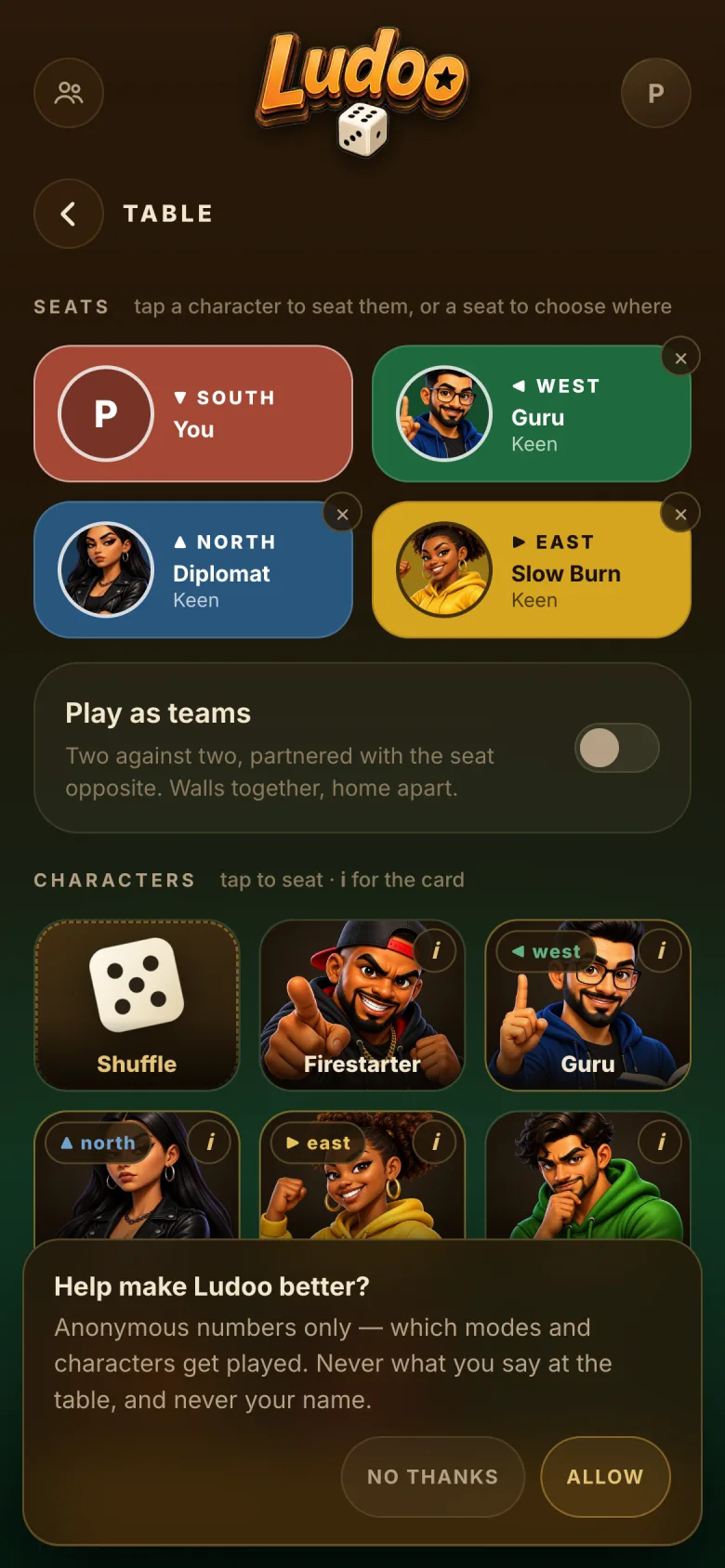
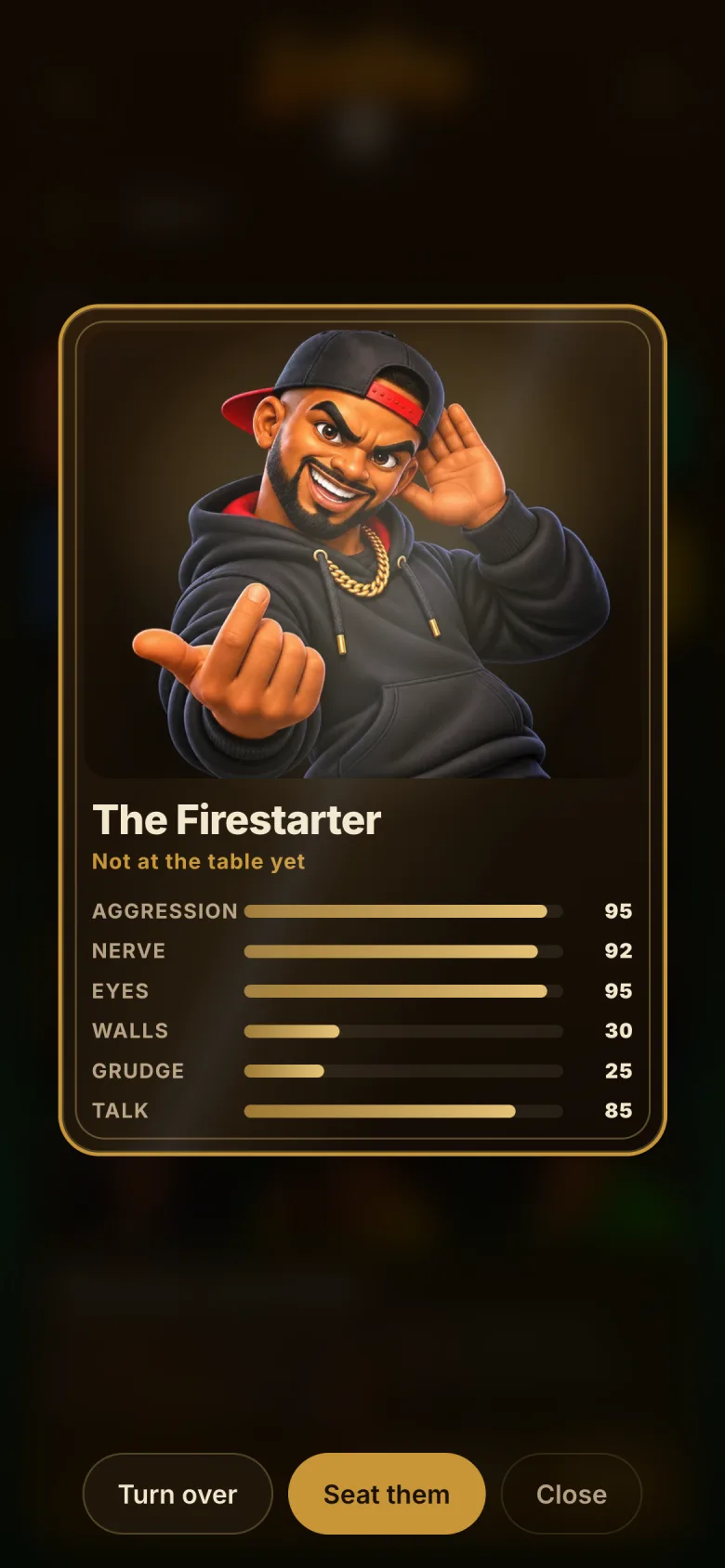
Drag on the glass and let go, and the die travels — it arcs, it lands, it clatters, and it can bounce clean off the table. If it does, that throw is gone. Nobody gets a quiet re-roll.
The server decides the face, so nobody can flick a better number. What your hand decides is how it gets there.
Press the die and sweep. Let go.
The same gesture the game takes — and, like the game, the number is drawn at the moment you let go and folded into the tumble, so the die is never corrected on screen. It simply arrives at it.
Four ways to play
The same game and the same rules, arranged four ways round whoever is actually in the room.
 You vs three
Solo
You against the characters, on this device. No signal needed.
You vs three
Solo
You against the characters, on this device. No signal needed.
 One phone
Pass & play
One phone going round a room. No accounts, no invitations.
One phone
Pass & play
One phone going round a room. No accounts, no invitations.
 By code
Private online
Everyone on their own phone. Share a six-character code.
By code
Private online
Everyone on their own phone. Share a six-character code.
 Shared screen
Table Mode
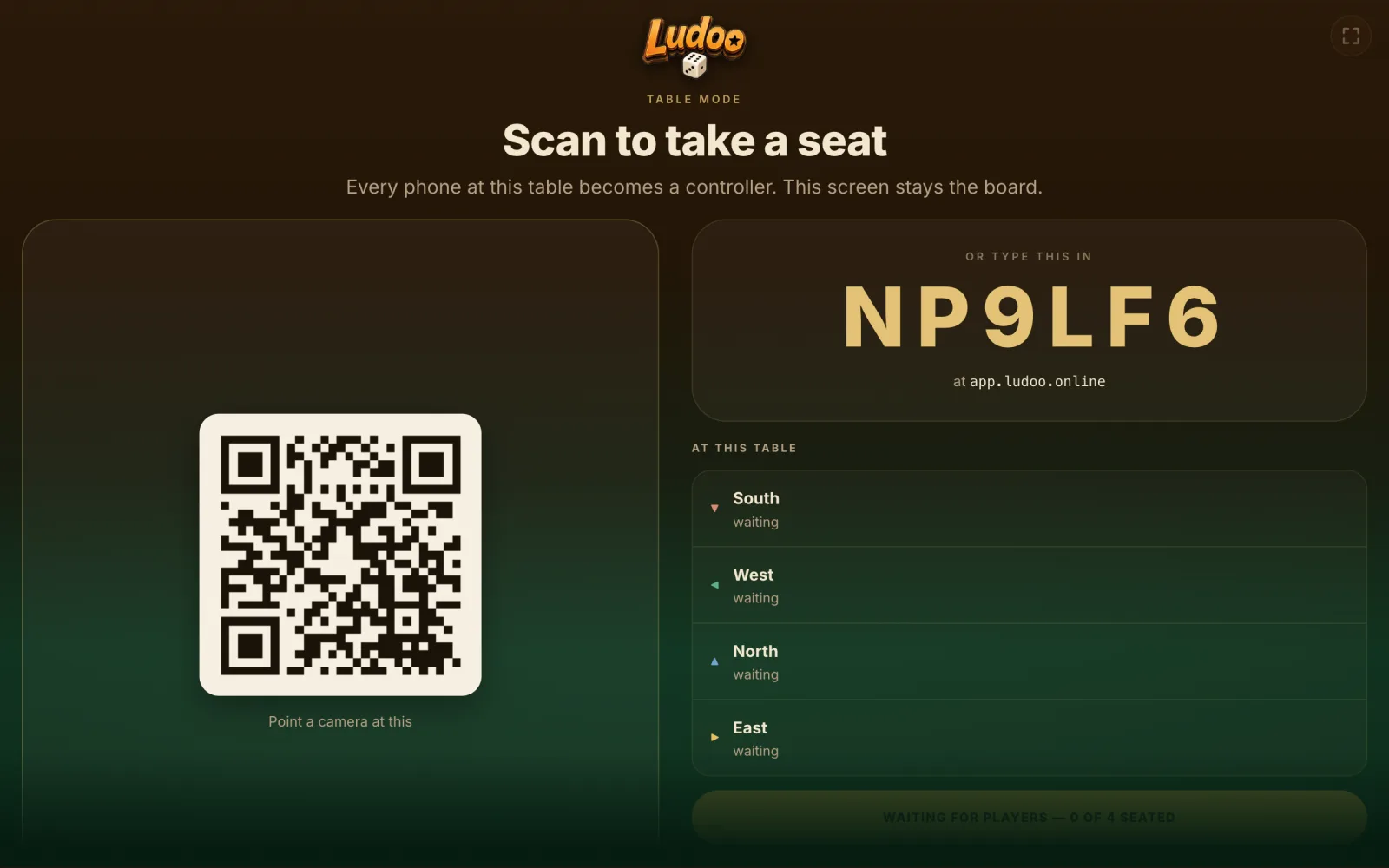
A television becomes the board. Every phone becomes a hand.
Shared screen
Table Mode
A television becomes the board. Every phone becomes a hand.
Table Mode
Open the board on a television, a laptop, a tablet — anything the room can see. Everyone scans the code on it and their own phone becomes their hand: their dice, their choices, their settings.
The cast
Seven opponents, each with a way of playing and a way of talking about it. Nothing is scripted at you — a remark is only made when the thing it refers to actually happened at your table.
The Firestarter
“No long ting! Straight back to the yard.”

The Guru
“Nothing personal. You were about to be a problem.”

The Diplomat
“You were the closest to home. That was all.”

The Slow Burn
“Backwards, and now I'm nearly home. Both at once.”
The rules
Everybody's family plays Ludo slightly differently, and every one of those versions is the correct one. Ludoo takes that seriously: the contested rules are settings, not assumptions, and the canonical set is being decided in rules workshops with players rather than by a developer with an opinion.
At some tables, yes; at others the sixes just keep coming. It is a setting, because both tables exist and both are right.
It is at your cousin's house. Whether it reaches one square or the whole lane changes the game completely, so Ludoo asks before the match rather than during it.
The throw is gone. The die is physical here, and so is missing.
The shared board works in a browser right now. The phone app is in testing, and this page will say the day it is not.